
Is Ear Harmonisation Safe?
Find out how the non-surgical ear harmonisation technique works, its safety profile, and why it is considered a low-risk, minimally invasive alternative.
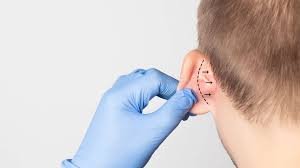
For those wishing to correct “prominent ears” or improve facial symmetry, safety is always the primary concern. For decades, surgical otoplasty was the only way, but the fear of general anaesthesia, hospital-acquired infections, and scarring prevented many from taking that step.
With the arrival of ear harmonisation, the question has changed: “Is a stitch-free procedure truly safe?”. The short answer is: yes, and in many respects, it is considered safer than the traditional surgical approach.
Why is Harmonisation considered safe?
The safety of ear harmonisation (non-surgical otoplasty) lies in its minimally invasive nature. Here are the pillars that ensure patient integrity:
1. Local vs. General Anaesthesia
Unlike traditional surgery, which often requires deep sedation or general anaesthesia, harmonisation is performed exclusively with local anaesthetic. This eliminates the systemic risks associated with general anaesthesia, allowing the patient to remain conscious and comfortable throughout.
2. Controlled Clinical Environment
The procedure is carried out in a specialised clinic setting, such as at Ear Harmonisation. This drastically reduces the risk of hospital-acquired infections, as the patient is not exposed to the high-traffic environment of a hospital.
3. Absence of Major Incisions
As there are no scalpel cuts, the risk of haemorrhage or healing complications (such as extensive keloids) is extremely reduced. The procedure uses micro-entry points that heal quickly, much like a small earring hole.
Risks and Complications: What does the science say?
Every medical procedure carries risks, but in ear harmonisation, they are minimal and generally mild, such as:
Slight swelling or tenderness in the first few days.
Mild local redness.
Serious complications are rare, precisely because the procedure does not involve deep structures or large blood vessels.
The Profile of the Specialised Professional
The safety of any procedure depends on the skill of the person performing it. At Ear Harmonisation, the technique is based on rigorous aseptic and anatomical protocols. Understanding the cartilage structure is what ensures the result is not only beautiful but safe in the long term.
Who is the procedure suitable for?
Harmonisation is safe for both adults and teenagers. Being less physically and psychologically traumatic, it is an excellent option for those with a phobia of surgical needles or hospitals, providing a peaceful experience from start to finish.
Conclusion
If the fear of surgery was what kept you from your dream of having harmonious ears, the non-surgical technique removes that barrier. It is a quick, predictable procedure with a superior safety profile compared to invasive alternatives.
Blog
Understand how ear harmonisation offers natural, scar-free results compared to traditional otoplasty, and why it is becoming the preferred choice in aesthetic medicine.
Many people feel insecure or even face bullying due to the shape of their ears. Discover how harmonisation can restore confidence through subtle and natural balance.
Discover why this non-surgical, in-clinic procedure offers natural and long-lasting results, and how it compares to surgical alternatives.
Find out how the non-surgical ear harmonisation technique works, its safety profile, and why it is considered a low-risk, minimally invasive alternative.
Learn everything about ear harmonisation: the innovative, incision-free technique that reshapes and balances your ears with precision and confidence.